Homemade Croissants Without Mixer
Highlighted under: Sugar Studio
I've always been intimidated by making croissants from scratch, but I finally decided to give it a try without using a mixer. With a bit of patience and some simple ingredients, I managed to create flaky, buttery layers that are simply irresistible. This method allowed me to appreciate the beauty of the folding technique, and I found it incredibly rewarding to watch the dough transform. Now, I can proudly share this recipe with you, making it accessible for anyone willing to take a culinary adventure at home!
When I first attempted to make croissants without a mixer, I found the process to be an engaging challenge. I discovered that the key to achieving those beautiful layers lies in the folding and rolling technique. It’s all about patience and precision! Every fold traps air pockets, resulting in that lovely flaky texture we all crave.
During the process, I learned to be mindful of the temperature of my dough. Keeping it cold really helps the butter remain solid, creating layers that cause the croissants to rise beautifully in the oven. Trust me, once you bite into a warm croissant fresh from the oven, all the effort will be worth it!
Why You'll Love This Recipe
- Rich, buttery flavor that melts in your mouth
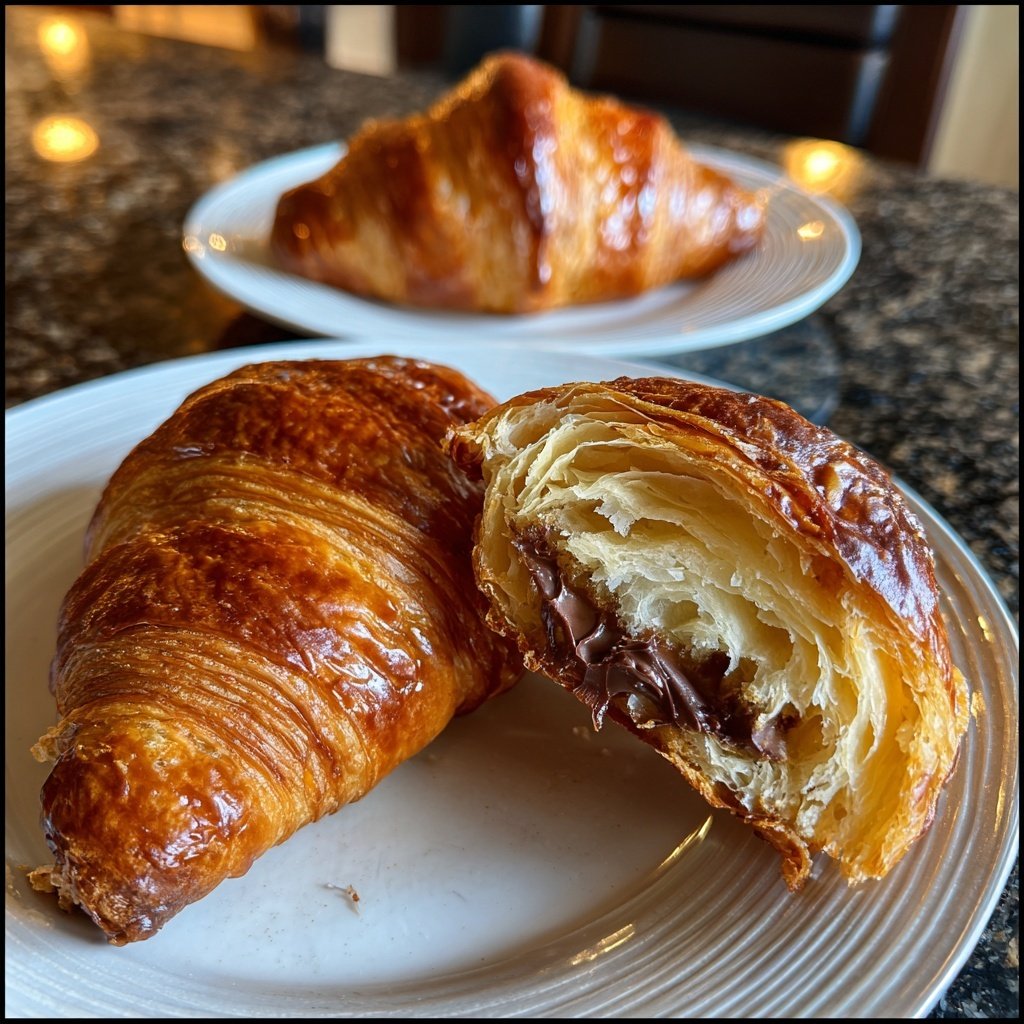
- Delicately flaky layers with a satisfying crunch
- No mixer required, making it accessible for all home bakers
Understanding the Folding Technique
The folding technique is crucial for achieving the flaky layers that define a good croissant. Each turn creates more layers of butter and dough, which expands during baking to create that signature puff. It's important to roll out the dough to the specified thickness—around 0.5 cm—when incorporating the butter. Not rolling enough can lead to gluten development that makes the dough tough instead of tender. Aim for smooth, even rolls to help create a uniform texture.
When performing each turn, be gentle yet precise. After each roll and fold, wrap the dough and let it chill. This resting time is essential; it keeps the butter cold and solid, crucial for creating those distinct layers. If the butter begins to soften too much, it may leak into the dough instead of staying in distinct layers which can flatten the final product.
Choosing Your Ingredients Wisely
Quality ingredients make a big difference in the flavor and texture of your croissants. Opting for high-quality unsalted butter ensures you have complete control over the salt levels in your dough. The butter should be very cold initially; too soft butter can blend into the dough during the folds, ruining the delicate layer separation. If you're in a pinch, you can substitute with margarine, though the final taste will differ significantly.
The choice of flour is also integral. While all-purpose flour works perfectly for this recipe, using bread flour will yield a chewier croissant due to its higher protein content. Just remember to adjust your hydration if you switch flours, as bread flour may absorb more water.
Ingredients
Gather these ingredients before you start for a smooth baking experience:
For the Dough
- 500g all-purpose flour
- 250ml cold water
- 10g salt
- 40g sugar
- 10g active dry yeast
- 30g unsalted butter (melted)
For the Butter Layer
- 250g unsalted butter (cold and cubed)
Ensure all ingredients are at the right temperature before starting to make the dough!
Instructions
Follow these steps to create your homemade croissants:
Prepare the Dough
In a bowl, combine the flour, salt, sugar, and yeast. Gradually mix in the cold water and melted butter until a dough forms. Knead briefly until smooth.
Chill the Dough
Cover the dough with plastic wrap and refrigerate for at least 1 hour to firm up.
Create the Butter Layer
Between two sheets of parchment paper, pound the cold cubed butter into a flat rectangle about 0.5 inches thick. Chill again until firm.
Incorporate Butter
Roll out the chilled dough into a rectangle. Place the butter layer in the center, folding the dough over to completely encase it. This is your first 'turn'.
Perform Turns
Roll out the dough again into a rectangle, fold into thirds, and chill. Repeat this process two more times, allowing the dough to rest in the fridge each time.
Shape the Croissants
Roll out the final dough into a large rectangle. Cut it into triangles, then roll each triangle from the base to the tip to form the croissant shape.
Proof the Croissants
Place the shaped croissants on a baking tray lined with parchment paper. Let them rise at room temperature for about 1 hour or until doubled in size.
Bake
Preheat the oven to 200°C (400°F). Bake the croissants for 20-25 minutes or until golden brown. Enjoy warm!
Remember to brush the croissants with an egg wash before baking for an extra shiny finish!
Pro Tips
- For the best results, ensure that all your ingredients are cold, especially the butter. This will help in achieving the desired flaky layers.
Make-Ahead Tips
If you want freshly baked croissants without the overnight stress, prepare your dough a day ahead. After completing the turns, shape and proof your croissants, then place them in the fridge overnight. When you’re ready to bake, take them out, let them come to room temperature (about 30-45 minutes), and then bake as usual. This method deeply enhances the flavor and makes your morning hassle-free.
Alternatively, you can fully bake your croissants and freeze them before they reach their golden state. Just before serving, brush them with an egg wash and pop them into the oven at 200°C (400°F) for 10-12 minutes until heated through and golden. This preserves the flaky texture while providing a freshly baked experience.
Troubleshooting Common Issues
One common issue is the dough rising improperly during proofing. If your kitchen is too cold, consider placing the croissants in a slightly warm oven (not exceeding 30°C or 86°F) just for proofing. This creates a warm environment conducive to yeast activity, leading to a good rise.
Another issue can be dense croissants caused by overworking the dough. If your dough becomes tough, let it rest longer in the refrigerator, which allows the gluten to relax, making it easier to roll out and shape without excessive strain. Keeping a close eye on the buttery layers during rolling also prevents them from merging with the dough.
Serving Suggestions
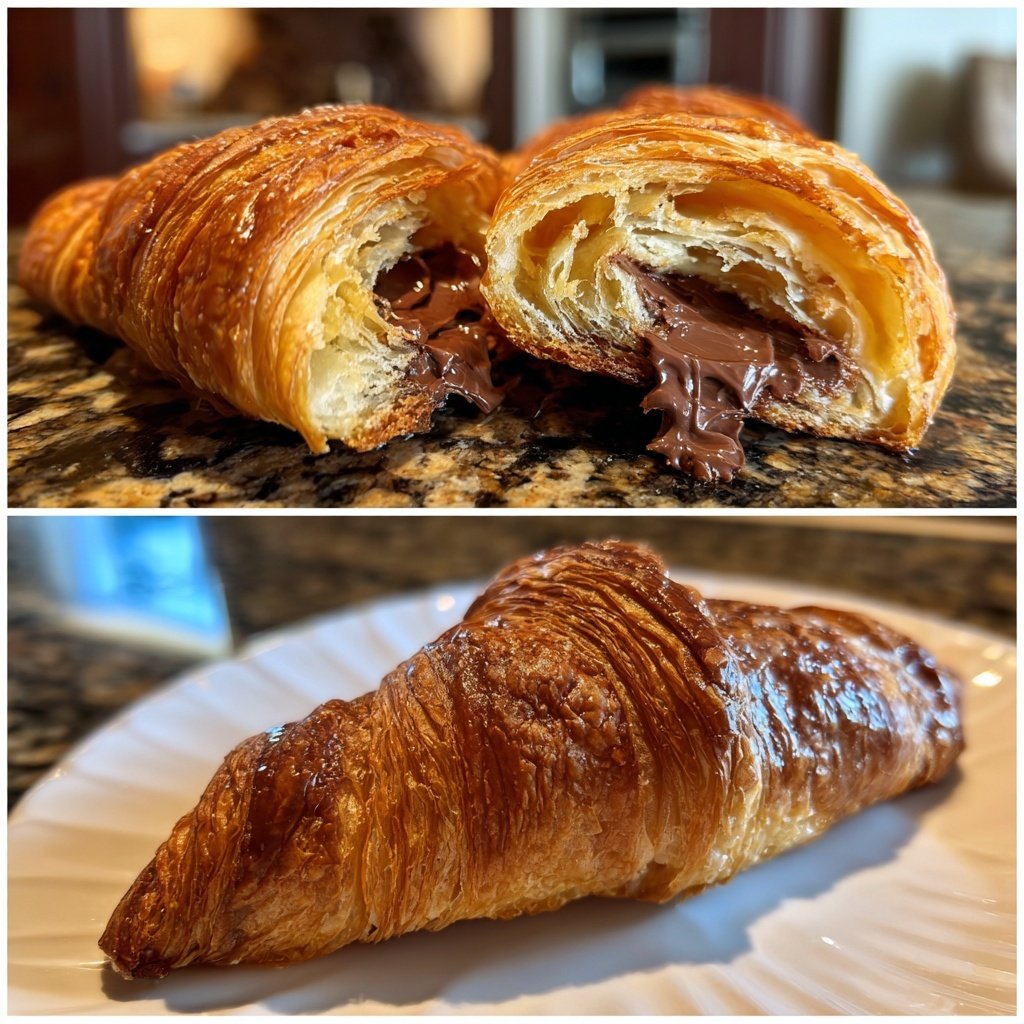
Freshly baked croissants are delightful on their own, but you can elevate them with a few simple add-ons. For an indulgent breakfast, serve with artisan jams, or spread a thin layer of Nutella for a sweet twist. Pair them with a light salad or a slice of cheese for a brunch platter that impresses.
Consider serving citrus-infused butter on the side for a refreshing flavor contrast. For a savory touch, add deli meats or scrambled eggs inside the croissants after baking, creating a deliciously flaky breakfast sandwich.
Questions About Recipes
→ Can I use whole wheat flour instead of all-purpose flour?
Yes, but the texture may be denser. It's best to use a combination of whole wheat and all-purpose for a lighter croissant.
→ How can I store leftover croissants?
Store them in an airtight container at room temperature for up to 2 days, or freeze them for longer storage.
→ What's the best way to reheat croissants?
Reheat in the oven at 180°C (350°F) for about 5-10 minutes to restore their flakiness.
→ Can I make the dough ahead of time?
Absolutely! You can prepare the dough a day in advance and keep it in the refrigerator until you're ready to shape and bake the croissants.
Homemade Croissants Without Mixer
Created by: Helena Wright
Recipe Type: Sugar Studio
Skill Level: Intermediate
Final Quantity: 12 croissants
What You'll Need
For the Dough
- 500g all-purpose flour
- 250ml cold water
- 10g salt
- 40g sugar
- 10g active dry yeast
- 30g unsalted butter (melted)
For the Butter Layer
- 250g unsalted butter (cold and cubed)
How-To Steps
In a bowl, combine the flour, salt, sugar, and yeast. Gradually mix in the cold water and melted butter until a dough forms. Knead briefly until smooth.
Cover the dough with plastic wrap and refrigerate for at least 1 hour to firm up.
Between two sheets of parchment paper, pound the cold cubed butter into a flat rectangle about 0.5 inches thick. Chill again until firm.
Roll out the chilled dough into a rectangle. Place the butter layer in the center, folding the dough over to completely encase it. This is your first 'turn'.
Roll out the dough again into a rectangle, fold into thirds, and chill. Repeat this process two more times, allowing the dough to rest in the fridge each time.
Roll out the final dough into a large rectangle. Cut it into triangles, then roll each triangle from the base to the tip to form the croissant shape.
Place the shaped croissants on a baking tray lined with parchment paper. Let them rise at room temperature for about 1 hour or until doubled in size.
Preheat the oven to 200°C (400°F). Bake the croissants for 20-25 minutes or until golden brown. Enjoy warm!
Extra Tips
- For the best results, ensure that all your ingredients are cold, especially the butter. This will help in achieving the desired flaky layers.
Nutritional Breakdown (Per Serving)
- Calories: 380 kcal
- Total Fat: 26g
- Saturated Fat: 15g
- Cholesterol: 195mg
- Sodium: 85mg
- Total Carbohydrates: 32g
- Dietary Fiber: 3g
- Sugars: 24g
- Protein: 6g